


 Khizrana Begum
Web & Informational Content Writer
Khizrana Begum is a Web & Informational Content Writer who creates clear, practical and reader-friendly content across web topics, technology, digital trends, online guides and general information.
Read Full Bio of Author →
Web & Informational
Khizrana Begum
Web & Informational Content Writer
Khizrana Begum is a Web & Informational Content Writer who creates clear, practical and reader-friendly content across web topics, technology, digital trends, online guides and general information.
Read Full Bio of Author →
Web & InformationalContent Writer
 Sameena Begum
Web & Digital Content Reviewer
Sameena Begum is a Web & Digital Content Reviewer who reviews selected WorldWideWebBlog articles for clarity, structure, consistency, readability and responsible presentation.
Read Full Bio of Reviewer →
Web & Digital
Sameena Begum
Web & Digital Content Reviewer
Sameena Begum is a Web & Digital Content Reviewer who reviews selected WorldWideWebBlog articles for clarity, structure, consistency, readability and responsible presentation.
Read Full Bio of Reviewer →
Web & DigitalContent Reviewer
Real Estate Website Design: The digital era has seen the real estate industry develop at a high pace. The buyers and sellers do not have to start their trip by going to offices or reading newspaper advertisements. They begin online instead, searching properties, researching on neighborhoods, comparing prices and communicating with agents via websites.
This has changed the real estate agency websites design to become a key consideration to real estate agencies, property developers and separate agents. An effective web site does not just display property listings but it also generates leads, creates trust and enhances brand awareness.
This is a full-course guide to real estate website designing which covers all you need to know about its features, benefits, best practices, tools, and the key design factors.
Table of Contents
What is Real Estate Website Design?
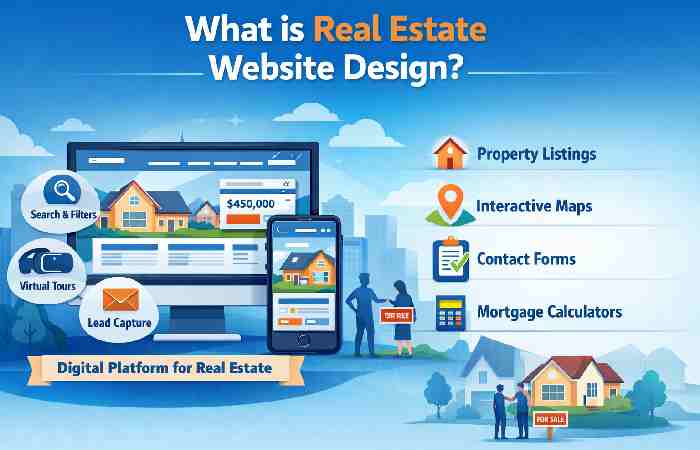
Real estate site design is defined as the methodology of the construction of a specific online platform that is specially designed to display the property in question, to make the buying and selling parties meet, and to create real estate leads.
The features of these websites include:These websites are designed with features such as:
- Property listing pages
- Interactive maps
- Virtual tours
- Lead capture forms
- Mortgage calculators
- Advanced search filters
The goal is to create a visually appealing, user-friendly, and conversion-focused website that helps real estate businesses attract and retain clients.
Why Real Estate Website Design Matters?
A professional real estate website does much more than display listings. It plays a major role in marketing, branding, and lead generation.
| Factor | Explanation |
| First Impression | Most buyers judge your credibility based on your website |
| Lead Generation | Contact forms and call-to-action buttons help capture potential clients |
| 24/7 Property Showcase | Listings are accessible anytime, anywhere |
| Brand Building | Professional design builds trust and authority |
| Marketing Integration | Works with SEO, social media, and digital ads |
In simple terms, your website becomes your digital real estate office.
Key Features of a Modern Real Estate Website
To compete in today’s market, a real estate website must include essential features that improve user experience and increase engagement.
Core Features
| Feature | Description | Benefit |
| Property Listings | Display homes, apartments, land, and commercial spaces | Makes property search easy |
| Advanced Search Filters | Filter by price, location, property type | Improves user convenience |
| Interactive Maps | Map-based property search | Helps users visualize locations |
| High-Quality Images | Professional property photos | Attracts buyers instantly |
| Virtual Tours | 360° walkthrough of properties | Enhances online viewing |
| Contact Forms | Easy inquiry forms | Generates leads |
| Mortgage Calculator | Estimate loan payments | Assists buyers financially |
These features create a complete property discovery experience for visitors.
Essential Elements of Effective Real Estate Website Design
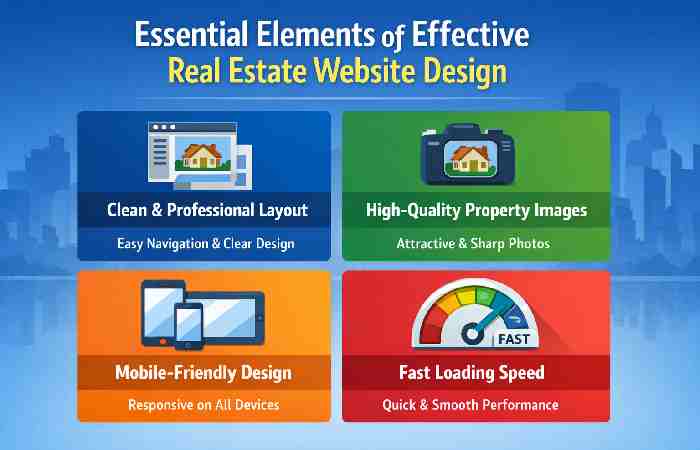
Design plays a major role in whether visitors stay on your website or leave within seconds.
- Clean and Professional Layout
A cluttered website can confuse visitors. Real estate websites should have:
- Simple navigation
- Clear property categories
- Easy-to-read text
- Proper spacing
A clean layout improves usability and keeps users engaged.
- High-Quality Property Images
In real estate, visual appeal is everything. Buyers often decide whether they like a property based on images alone.
Use:
- Professional photography
- Wide-angle interior shots
- Exterior building photos
- Neighborhood images
- Mobile-Friendly Design
More than half of property searches happen on smartphones.
A responsive website ensures:
- Faster loading speed
- Proper display on all devices
- Better user experience
- Fast Loading Speed
A slow website can cause visitors to leave before they even see listings.
Website Speed Impact
| Loading Time | User Behavior |
| 1–2 seconds | Best user experience |
| 3 seconds | Acceptable performance |
| 5 seconds | Many visitors leave |
| 8+ seconds | High bounce rate |
Optimizing images, hosting, and coding improves loading speed.
Types of Real Estate Websites
Different real estate businesses require different types of websites.
| Website Type | Purpose | Example Use |
| Real Estate Agency Website | Promote services and listings | Real estate companies |
| Property Listing Portal | Large property marketplaces | Listing platforms |
| Agent Personal Website | Personal branding | Individual agents |
| Property Developer Website | Showcase new projects | Builders and developers |
| Rental Listing Website | Focus on rental properties | Property management firms |
Choosing the right type depends on your business goals and audience.
Examples of Companies of Real Estate Website Design
India
| Company Name | Primary Service | Location (City, India) | Notes |
| RealtyDigi | Real estate web design & software development | Gurugram, Haryana | Specializes in real estate branding and CRM integration |
| Syspree Web Design Company | Website design & digital marketing | Thane, Maharashtra | Full‑service web design agency |
| Vook Tech India Pvt Ltd | Web design & development | Bhiwadi, Rajasthan | Strong design and technology focus |
| ICO WebTech Pvt. Ltd. | Website designing company | Delhi | Experienced in custom and responsive designs |
| Invoidea | Web & software development | New Delhi | Known for high‑quality web solutions |
| WebGuru Infosystems | Website designer & developer | Kolkata, West Bengal | Large portfolio with varied industry sites |
| TechCentrica | Website design & SEO | Noida, Uttar Pradesh | Strong SEO integration with web design |
| Stymeta Technologies | Website & app design | Mumbai, Maharashtra | Focuses on digital brand presence |
| Codepater Pvt. Ltd. | Web design services | Pune, Maharashtra | Agile team for custom web projects |
| Think digital | Best website design company in Nashik | Website design agency | Nashik, Maharashtra | Highly rated local design firm |
| Web Designer India | Web design & development | Mumbai, Maharashtra | Responsive and modern web builds |
| Webiz India – Business Website Design Company | Website designer | Lucknow, Uttar Pradesh | Budget‑friendly and dynamic designs |
| Tenet – UI UX Design Studio | UI/UX and web design agency | Noida, Uttar Pradesh | Focus on user experience and interface |
| FutureGenApps | Web design & digital solutions | Noida, Uttar Pradesh | Small but effective web design team |
| SriG Systems | Website design & development | Hyderabad, Telangana | Strong regional presence |
| Egadgetportal – Digital Marketing & Design | Web design & digital marketing | Delhi, India | Combined design + marketing services |
| Ujudebug – Web & App Dev | Web design & app development | Guwahati, Assam | Highly‑rated for custom web builds |
| Sky Digital World | Website design & digital presence | Indore, Madhya Pradesh | Offers responsive website development |
UK
| Company Name (UK) | Primary Service | Location / Notes |
| Bond Media UK | Real estate & property web design | UK agency focused on estate agent site design with advanced search tools and lead capture features |
| QuantaTec Limited | Estate agent website design + property software | London‑based specialist offering responsive, SEO‑ready property sites |
| The Property Jungle | Property website design & development | Experienced UK developer with thousands of sites built over 20+ years |
| ETA Web Design | Estate agent / realtor website design | UK web designers creating responsive property sites with CRM integrations |
| Rudo Agency | Property & real estate web design | London agency building conversion‑focused sites for property clients |
| Tall Zebra | Website design for property developers | UK web design focused on property developer and estate sites |
| Yello Media – yelloProperty | Property portal & estate agent web solutions | UK team offering property search, SEO, and customisation features |
| Big Web Company | Custom estate agent & lettings site design | UK custom property web solutions with listings features |
| Estateware | Estate agent website design & software | UK property site builder with real‑time listings integration |
| Design Hero | Real estate web design experts | UK designers experienced with property industry websites |
| XL Marketing Grp (XLMG) | Digital marketing + web design | Full‑service UK agency offering web design that can be tailored for real estate firms |
| Developers House | Web & digital solutions (incl. real estate) | UK design & development agency serving real estate among other sectors |
| Webdadi | Website design & development | UK web developer with SME focus (can serve estate agencies) |
Europe
| Company / Agency | Primary Service | Location (Europe) | Notes |
| EWM | Web design & digital marketing | Geneva, Switzerland | Branding, web design & development work including real estate‑oriented sites and digital solutions |
| Paagees | Real estate website creation | Spain / Europe | Professional real estate site solutions with CRM property sync and templates |
| digitalDot | Web design & development | Spain | Web design firm offering tailored sites with SEO support (suitable for agencies) |
| Veeber Media | Real estate focused web & branding | Berlin, Germany | Design and branding specifically for real estate companies and agencies |
| DigitalHappy | Web design / development services | Europe (Spain) | Projects include real estate web design and development work |
| nicesoft.pl (Real Estate Web Design) | Tailored estate agency websites | Poland | Creates professional, responsive sites with CRM / portal integrations |
| Gaumina | Web design, development & digital | Lithuania & Europe | Large interactive agency capable of real estate digital projects |
| Splendid Websites | Estate agent web design | UK / Europe | Focused on property sites with SEO + lead generation (covers EU clients) |
| ETA Web Design | Estate agent website design | UK / Europe | Tailored realtor and agent property site design services |
| AppDesign.dev | Web design for real estate | Europe (online) | Real estate UX/UI and custom design services |
Important Pages Every Real Estate Website Should Have
A successful real estate website includes multiple pages that guide visitors through the property search journey.
| Page | Purpose |
| Home Page | Introduces brand and featured listings |
| Property Listings | Displays all available properties |
| Property Details Page | Shows photos, price, features, and location |
| About Us | Builds trust and credibility |
| Services | Explains real estate services |
| Blog | Improves SEO and provides valuable information |
| Contact Page | Allows visitors to reach agents easily |
These pages work together to create a complete user experience.
The Role of UX (User Experience) in Real Estate Websites
User experience determines how easily visitors can interact with your website.
A good UX design helps users quickly find what they are looking for.
UX Best Practices
- Simple navigation menu
- Clear search filters
- Easy property comparisons
- Quick contact options
- Map-based browsing
When visitors enjoy using your website, they are more likely to become clients.
Real Estate Website Design Trends
The real estate industry is constantly adopting new web design trends.
| Trend | Description |
| Virtual Property Tours | Interactive home walkthroughs |
| AI Chatbots | Instant responses to customer queries |
| 3D Property Models | Realistic property visualization |
| Dark Mode Design | Modern visual experience |
| Interactive Maps | Property discovery through maps |
These innovations create a more immersive property search experience.
Tools and Platforms for Real Estate Website Design
Several platforms help developers create real estate websites efficiently.
| Platform | Features | Best For |
| WordPress | Flexible, SEO-friendly | Real estate agencies |
| Wix | Drag-and-drop builder | Beginners |
| Squarespace | Elegant design templates | Small agencies |
| Shopify | E-commerce capabilities | Property services |
| Custom Development | Fully customized websites | Large companies |
WordPress is particularly popular due to its real estate themes and plugins.
Benefits of Professional Real Estate Website Design
Investing in professional website design offers long-term benefits.
| Benefit | Explanation |
| Higher Lead Generation | Attractive design encourages inquiries |
| Better Branding | Professional appearance builds trust |
| Improved SEO Rankings | Optimized structure improves visibility |
| Competitive Advantage | Stand out from other agencies |
| Increased Sales | More leads convert into property deals |
A high-quality website can significantly increase business growth and client engagement.
Common Mistakes in Real Estate Website Design
Avoiding design mistakes is just as important as following best practices.
| Mistake | Impact |
| Too Many Pop-Ups | Annoys visitors |
| Poor Navigation | Makes property search difficult |
| Low-Quality Images | Reduces buyer interest |
| Slow Loading Speed | High bounce rates |
| Lack of Contact Options | Missed leads |
Fixing these issues improves user satisfaction and conversions.
How to Design a Real Estate Website (Step-by-Step)?

Designing a successful real estate website requires careful planning.
Step-by-Step Process
- Define Your Target Audience
Understand whether you are targeting buyers, sellers, renters, or investors. - Choose a Domain Name
Select a simple and memorable domain related to real estate. - Select a Website Platform
Choose WordPress, Wix, or custom development. - Design the Layout
Focus on user-friendly navigation and property display. - Add Property Listings
Include detailed descriptions, photos, and pricing. - Optimize for SEO
Use relevant keywords and structured content. - Launch and Promote
Share your website through social media, ads, and email marketing.
Best Color Schemes for Real Estate Websites
Color psychology plays an important role in website design. The right colors build trust and professionalism.
| Color | Meaning | Use in Real Estate |
| Blue | Trust and reliability | Popular for agency websites |
| Green | Growth and prosperity | Used for property investment sites |
| White | Clean and minimal | Improves readability |
| Black | Luxury and elegance | Premium property listings |
| Gold | Wealth and prestige | High-end real estate projects |
Combining neutral colors with professional accents creates a modern and attractive design.
Real Estate Website Design Cost
The cost of designing a real estate website can vary depending on complexity.
| Website Type | Estimated Cost |
| Basic Template Website | $200 – $800 |
| Professional Business Website | $1,000 – $5,000 |
| Advanced Real Estate Portal | $5,000 – $20,000+ |
| Custom Enterprise Website | $20,000+ |
Investing in quality design can deliver long-term returns through lead generation.
Future of Real Estate Website Design
The future of real estate websites will be shaped by technology and digital innovation.
Emerging technologies include:
- Artificial Intelligence property recommendations
- Augmented Reality home tours
- Blockchain-based property transactions
- Voice search property discovery
These technologies will make real estate websites more interactive, efficient, and user-friendly.
SEO in Real Estate Website Design
Search Engine Optimization (SEO) is essential for attracting organic traffic to your website.
Without SEO, even the most beautiful website may never appear in search results.
| Strategy | Description |
| Keyword Optimization | Use property-related keywords |
| Local SEO | Target location-based searches |
| Property Schema Markup | Helps search engines understand listings |
| Blog Content | Provides helpful real estate information |
| Image Optimization | Use descriptive image alt text |
For example, keywords like:
- “homes for sale near me”
- “apartments in [city name]”
- “real estate agents in [location]”
can significantly improve search visibility.
Conclusion
Real estate website design is no longer just about creating an online presence. It has become a powerful tool for marketing, branding, and lead generation.
A well-designed real estate website should include:
- Attractive property listings
- Fast loading speed
- Mobile-friendly design
- Advanced search features
- SEO optimization
The real estate businesses can develop websites with appeal, attracting visitors, establishing trust and turning leads into successful property deals by aiming at user experience, visual and functionality.
The use of a professional real estate website in the contemporary online market does not only improve one, but it is a long term success factor in real estate business.
Khizrana Begum is a Web & Informational Content Writer who creates clear, practical and reader-friendly content across web topics, technology, digital trends, online guides and general information.
Sameena Begum is a Web & Digital Content Reviewer who reviews selected WorldWideWebBlog articles for clarity, structure, consistency, readability and responsible presentation.