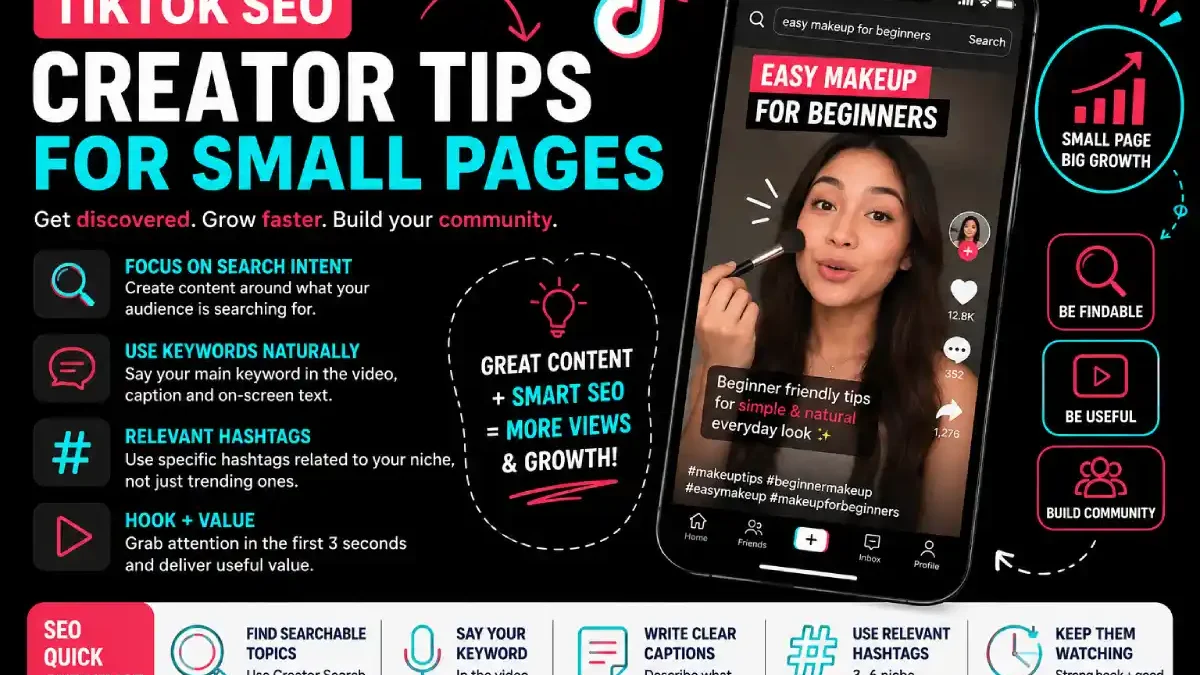
If you’re running a small account on TikTok, you might find it more difficult to get discovered than it is to make the actual videos. You consistently make them, put them over trending audio, and wonder why a smaller account mysteriously ends up having thousands upon thousands of views.
The missing piece is often TikTok SEO.
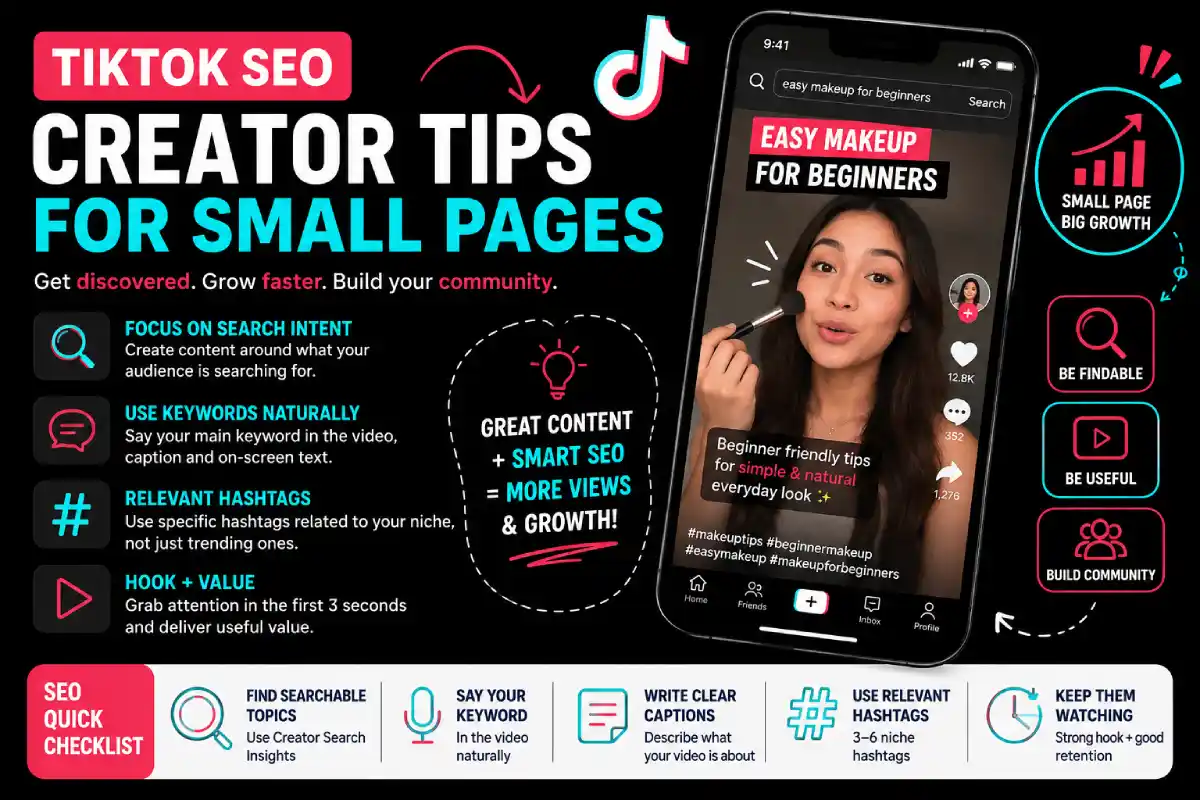
Making your video searchable for your target audience based on search terms for that topic, a question, a product, an idea, or a solution is essentially what TikTok SEO is-and it’s more than just randomly adding a billion hashtags! When your topic, on-screen words, spoken words, the words in your video and in your captions are all synchronized to accurately identify the type of video they’re seeing, then the platform will rank them.
According to the TikTok search algorithm, the result is “an aggregation of relevance and engagement signals combined. Some of the key factors include: How well the content relates to the search query; the hashtags on the video; sound on the video; interactions the user has, along with others.”
This is good news for the small creator; you don’t necessarily have to have a bazillion followers to have helpful content that could be discovered
Table of Contents
What Is TikTok SEO?

TikTok SEO is all about adjusting what content you upload to increase your chances of your videos showing up whenever a user searches up what they are looking for. Similar to how we improve a page’s chances of ranking well on Google for SEO, this will improve a video’s chances of being seen in TikTok search.
For example, suppose you create skincare videos.
Instead of making a vague video titled:
“My favorite routine!”
you could create:
“Simple skincare routine for oily skin”
The second version immediately tells TikTok and the viewer what the video is about.
That clarity matters.
In addition, TikTok has launched its own Creator Search Insights tool where creators can see what topics are being researched and view any content gaps.
TikTok SEO vs Traditional SEO
| TikTok SEO | Traditional SEO |
| Optimizes short-form videos | Optimizes websites and web pages |
| Uses spoken words, text, captions and hashtags | Uses titles, headings, keywords and page content |
| Focuses on TikTok search and discovery | Focuses mainly on search engines |
| Watch time and interactions are important | Rankings depend on many website and authority signals |
| Trends can influence discovery | Search intent and website relevance are major factors |
The critical thing to take note of is that TikTok SEO is not keyword stuffing. It is about making what you’ve put out there search relevant.
Why TikTok SEO Matters for Small Pages

Large creators have an obvious advantage: they already have an audience.
A small page has to work differently.
Instead of asking, “How can I get millions of followers?” ask:
“What is my ideal viewer searching for today?”
That question changes the entire content strategy.
A small creator making a useful video for a specific search can sometimes reach viewers who have never heard of the account before.
TikTok’s recommendation system considers several categories of information, including user interactions, content information, and user information. For search specifically, TikTok says how well content matches the search inquiry is an important factor.
That makes relevance particularly valuable for niche creators.
1. Start With Search Intent
Before making a video, identify what your audience actually wants to know.
Search intent is the reason behind a search.
Someone searching “best budget phone 2026” has a different intention from someone searching “how to transfer WhatsApp to new phone.”
The first person may want recommendations. The second wants instructions.
Small creators should concentrate on specific search intent because broad keywords can be extremely competitive.
For example:
- “Fitness” is broad.
- “10-minute home workout for beginners” is specific.
- “Makeup” is broad.
- “Makeup for oily skin beginners” is specific.
- “Travel” is broad.
- “Hyderabad weekend places” is specific.
The more clearly you understand the question, the easier it becomes to create a useful answer.
2. Use Creator Search Insights
The most practical place to start is TikTok’s Creator Search Insights tool. Touting it as a tool to help creators search for what’s trending, find topic trends, and discover content gaps.
Look for:
- Frequently searched topics
- Content gaps
- Related searches
- Questions your audience may have
- Topics connected to your niche
The content gap idea is particularly interesting for small pages.
Imagine people are searching for:
“Best hairstyles for thin hair”
but there are relatively few useful videos answering the question.
That is an opportunity.
Instead of copying the biggest creator in your niche, create the video that the searcher is missing.
3. Put the Main Keyword in the Video
One of the simplest TikTok SEO habits is also one of the easiest to overlook.
Say what the video is about.
If your target phrase is “easy breakfast recipes,” naturally say something like:
“Here are three easy breakfast recipes you can make before work.”
You can also place the phrase on screen.
TikTok’s current content-discovery systems can use information associated with videos, and TikTok’s own advertising technology shows that captions, voiceover and text inside videos can provide meaningful content signals.
The goal is not to repeat the keyword ten times.
Use it naturally once or twice.
4. Write Search-Friendly Captions
Your caption should give the video additional context.
Instead of:
“You need to try this
try:
“Easy breakfast recipes for busy mornings. These three options take only a few minutes to prepare.”
The second caption is more descriptive.
It tells both viewers and the platform what the content is about.
A useful caption formula is:
Primary topic + useful detail + natural variation
For example:
“TikTok SEO tips for small creators: how to use keywords, captions and search questions to make your videos easier to discover.”
That sounds much more natural than stuffing a caption with unrelated keywords.
5. Choose Hashtags Carefully
Hashtags are still relevant, just as long as they support your topic, they’re not your entireopic. One thing that people often miss adding:
#fyp #viral #foryou #trending #xyz #funny #love
to a video that has nothing to do with those subjects.
Instead, use hashtags that describe the actual content.
For a beginner photography video, you might use:
- #PhotographyTips
- #MobilePhotography
- #PhotographyForBeginners
- #PhonePhotography
TikTok says that hashtags organize videos and provide users with related content in categories, just like labels on a shelf.
The clearer the label, the easier it is to understand what belongs there.
6. Make the First Few Seconds Useful
SEO can help someone discover your video.
It cannot force them to watch it.
That is why the opening matters.
Avoid spending the first five seconds saying:
“Hi guys, welcome back to my channel…”
Get to the point.
Try:
“If you have a small TikTok page, stop doing this.”
Or:
“Here are three TikTok SEO mistakes small creators make.”
Or:
“Searching for affordable skincare for oily skin? Start here.”
A strong opening creates a reason to continue watching.
TikTok has additionally recognized storytelling, interactive formats, captions, and native vertical video as crucial creative decisions for creators.
7. Create Videos Around Questions
Questions are excellent starting points for TikTok SEO.
Look at the questions people repeatedly ask in your niche.
For example:
Beauty
- How often should I wash oily skin?
- What should I apply before sunscreen?
- Which moisturizer is best for dry skin?
Technology
- How do I clear phone storage?
- Which budget phone is best?
- How can I improve Wi-Fi speed?
Travel
- What are the best places to visit in Hyderabad?
- How much does a weekend trip cost?
- What should I pack for a short trip?
Each question can become a separate video.
This gives a small page something extremely valuable: a repeatable content system.
8. Build Topic Clusters
Don’t make one video about everything.
Choose a subject and create several related videos.
For example, if your niche is home workouts, you could create:
- Beginner home workout
- Home workout without equipment
- 10-minute home workout
- Home workout for weight loss
- Morning home workout
- Beginner leg workout
- Beginner upper-body workout
These videos are different, but they belong to the same broad topic.
Over time, this helps establish a clear identity for your page.
A Simple Topic-Cluster Example
| Main topic | Supporting video ideas |
| Skincare | Oily skin routine, sunscreen tips, cleanser mistakes |
| Fitness | Beginner workouts, stretching, home exercises |
| Technology | Phone tips, app tutorials, troubleshooting |
| Food | Easy recipes, meal ideas, cooking shortcuts |
| Travel | Destinations, budgets, packing, itineraries |
The advantage is consistency without making every video feel identical.
9. Don’t Ignore Watch Time
TikTok SEO is not just about keywords.
A perfectly optimized video that receives no views will probably not be a great piece of content.
TikTok states that user interactions—including watching content in full or skipping it—can influence recommendation systems, and watch time can be particularly important.
So your SEO strategy should have two parts:
Get discovered → keep attention.
You need both.
A useful structure is:
Hook → answer → demonstration → takeaway
For example:
“Three mistakes are making your phone battery drain faster. Here’s the first one…”
Then explain each mistake quickly.
10. Use On-Screen Text Strategically
On-screen text helps viewers understand your topic immediately, especially when they are scrolling quickly.
Keep it short.
Instead of:
“Today I am going to tell you about some of the things that you should know if you are a beginner who wants to improve your TikTok page.”
write:
5 TikTok SEO Tips for Beginners
Simple wins.
You can then introduce each point with short text:
- Find a searchable topic
- Say the keyword
- Answer the question
This makes the video easier to follow.
TikTok SEO Mistakes Small Pages Should Avoid
Small creators often make the same mistakes.
Keyword Stuffing
Repeating the same phrase again and again can make your content sound robotic.
Use keywords naturally.
Using Only Huge Hashtags
A massive hashtag does not automatically make your video relevant.
Choose hashtags that describe your subject.
Copying Viral Videos
Study successful formats, but add your own knowledge, examples, personality, or perspective.
Weak Hooks
Even a useful topic can fail if the opening gives viewers no reason to stay.
Changing Niches Constantly
If one day you post cooking videos and the next day you post gaming clips, it becomes harder to build a recognizable content identity.
Ignoring Analytics
Your previous videos contain useful information. Use it.
A Practical TikTok SEO Comparison for Small Creators
| Strategy | Weak approach | Better approach |
| Keyword | Random popular phrase | Specific search query |
| Caption | “Watch this!” | Clear description of the video |
| Hashtags | #fyp + unrelated tags | Relevant niche hashtags |
| Hook | Long introduction | Immediate value |
| Content | General topic | One specific question |
| Trends | Copy everything | Adapt relevant trends |
| Analytics | Focus only on views | Study retention and engagement |
| Posting | Random subjects | Consistent topic clusters |
How Long Does TikTok SEO Take to Work?
There is no guaranteed timeframe.
Some videos may get discovered quickly. Others may take longer to find the right audience.
Instead of judging your strategy after two or three posts, build a reasonable sample of content.
Try creating 20–30 search-focused videos around your niche.
Then compare the results.
Look for patterns rather than one viral exception.
If five videos about beginner tutorials consistently outperform five general videos, that is useful evidence.
Final Thoughts
TikTok SEO isn’t just some exclusive trick only used by the big guys. It’s one of the most straightforward and applicable ways for a smaller account to be discoverable by people actively looking for content. Focus less on the follower count, and more on the questions.
What does your audience want to know?
What phrase would they type into TikTok?
Can you answer that question in under 30-60 seconds, without taking a breath? If you can, that’s the backbone of good TikTok SEO right there.
Find what’s there through Creator Search Insights, make it obvious in your subject and script, hook them early and fast, use relevant tags and then look at your numbers: TikTok agree their search relevancy and engagement also makes them highly relevant.