


A campaign is creative when it is not just an advert. It alters the attitude of individuals towards a brand, their engagement with a brand or the way they recall a brand. The three campaigns that were most effective in 2025 did so particularly well by having a point of view, making the point of view in the right format, and making people feel that they were the part of the idea and not just observers of the idea. It is due to this that 2025 was chosen in terms of social-first brand building, greater reliance on culture and more experimentation on AI and experiential marketing.
The brands were also oriented to entirely different types of innovation. There were those that relied on humor and pop culture, others created immersive activations, others personalized with the help of AI and others made authenticity the message. It was that combination which made 2025 fresh.
Table of Contents
Comparison table: standout innovative marketing campaigns of 2025
| Brand / Campaign | Launch or key moment | Core idea | Why it stood out |
| Nike – “So Win” | February 2025, during Super Bowl LIX | A bold anthem centered on women athletes and the pressure they face to prove themselves | Nike turned a big-game ad into a cultural statement, pairing strong storytelling with a social campaign and a powerful athlete roster. It felt like a brand mission, not just a commercial. |
| PUMA – “Go Wild” | March 20, 2025 | A major brand repositioning that celebrates self-expression, running, and individuality | PUMA called it its biggest global campaign to date, and the message was simple but fresh: sport should feel joyful, authentic, and personal. |
| Chili’s – “Fast Food Financing” | April 2025 | A pop-up that spoofed payday lending while attacking fast-food value anxiety | The campaign turned pricing frustration into a memorable real-world experience, complete with a rival-adjacent location, gift cards, and social extensions. |
| State Farm – “Batman vs. Bateman” | March 2025 | A celebrity-heavy, pop-culture spoof that was originally planned for the Super Bowl and then pivoted to March Madness | The campaign mixed humor, recognizable IP, influencer energy, and smart media timing. It showed how fast a brand can adapt without losing the idea. |
| Columbia Sportswear – “Engineered for Whatever” | August 2025 | A playful outdoor brand platform that embraces chaos instead of pretending nature is always idyllic | Columbia made its gear feel tougher and more distinctive by using irreverence, product tests, and stunt-driven storytelling. |
| Aerie – “100% Aerie Real” | Recommitted in 2025, with major campaign activity in late 2025 | A clear anti-AI, anti-retouching brand stance built around real bodies and real images | Aerie turned authenticity into a competitive advantage by saying no to AI-generated bodies and no to retouching, which made the brand message unusually clear in an AI-heavy market. |
The campaigns, in detail
1) Nike’s “So Win” made empowerment feel current, not recycled
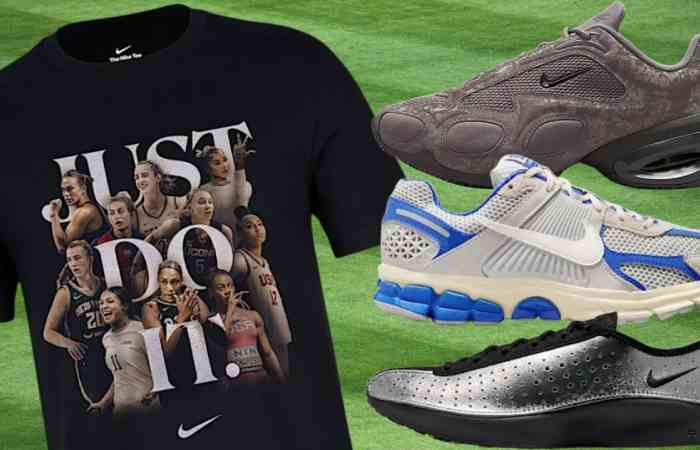
Nike’s 2025 Super Bowl anthem, “So Win,” was more than a glossy sports ad. It directly addressed the criticism and double standards faced by women athletes, then flipped that pressure into a message of confidence and action. Nike said the campaign debuted during Super Bowl LIX and featured athletes including Jordan Chiles, Caitlin Clark, Sabrina Ionescu, Sha’Carri Richardson, A’ja Wilson, and Sophia Wilson. The brand extended the idea across athlete content, still photography, and social media, which helped the message live beyond one TV moment.
What made it work was the clarity. The campaign was not trying to say everything. It was saying one thing well: women athletes are already changing the game, and Nike is there to amplify that reality. In a year when many campaigns chased attention through noise, Nike earned attention through conviction. Nike’s Marketing Strategy Explained
2) PUMA’s “Go Wild” showed how repositioning can feel emotionally alive
PUMA launched “Go Wild” in March 2025 as its biggest global brand campaign to date. The official message focused on self-expression, running, and the idea that greatness comes from being authentic, not polished. Marketing Dive noted that PUMA planned to increase marketing investment by 40% in support of the campaign, which tells you how central this repositioning was to the company’s 2025 strategy. PUMA “Go Wild” Campaign Details
The fresh part is that PUMA did not sell running as perfection. It sold running as a deeply human habit, something messy, personal, and energizing. That emotional angle made the campaign feel modern because it understood that people do not just want performance claims anymore; they want brands that reflect how they actually live.
3) Chili’s turned value marketing into entertainment
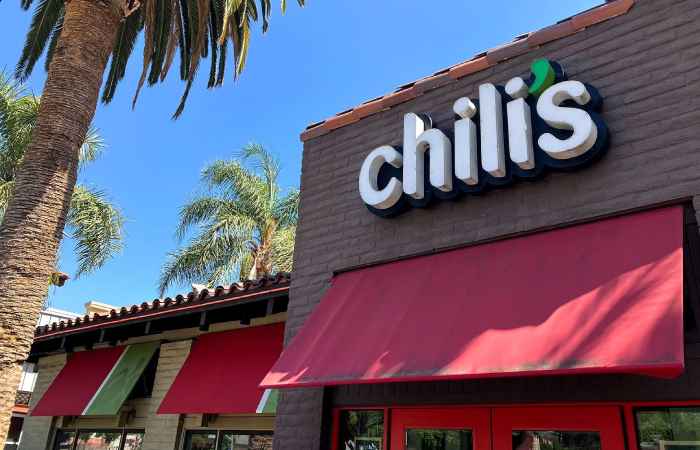
Chili’s “Fast Food Financing” pop-up was one of the most inventive retail-marketing moves of 2025. Marketing Dive reported that the New York experience opened next to a McDonald’s and mimicked a low-rent payday loan retailer, where “approved” visitors could receive a gift card to cover fast-food combo meals. The campaign also included social giveaways and a microsite, which helped extend the joke beyond the physical space.
The brilliance here was in the fit between message and medium. Chili’s wanted to talk about value, but instead of saying “we’re affordable” in a bland way, it built a stunt that made the idea unforgettable. The result was a campaign that felt funny, timely, and sharply aware of consumer frustration around prices.
4) State Farm’s “Batman vs. Bateman” proved that a pivot can still feel seamless
State Farm’s 2025 campaign is a strong example of agile marketing. The hero spot mixed Jason Bateman, Batman, SZA, Kai Cenat, and Jordan “the Stallion” Howlett in a Gotham-style comedy setup. Marketing Dive explained that the ad was originally intended for the Super Bowl, but the brand changed plans and moved the campaign to March Madness after reassessing its broader situation.
That pivot matters because it shows how a strong idea can survive a change in timing. The concept was flexible enough to travel from one sports moment to another without losing its punch. That is a useful lesson for 2025 marketing: the best campaigns are built like systems, not one-off assets.
5) Columbia Sportswear made irrelevance feel like a brand asset
Columbia’s “Engineered for Whatever” campaign launched in August 2025 and marked the brand’s first major global brand platform in over a decade. The agency description says the work shows Mother Nature at her worst and uses punchy OOH plus product tests with real stunt people to prove the gear can handle chaos.
The key innovation was tone. Outdoor advertising often leans too hard into clean skies, golden light, and “inspiration.” Columbia went the other way and made unpredictability part of the pitch. That felt more believable, and in marketing, believability often beats polish.
6) Aerie made anti-AI authenticity part of the brand promise
Aerie’s 2025 recommitment to “100% Aerie Real” is one of the clearest examples of brand positioning in the AI era. The brand’s own site says that in 2014 it stopped retouching people and bodies, and in 2025 it recommitted to never use AI to generate bodies or change people and bodies in its images. Vogue reported that the campaign launched on Instagram in October 2025 and later tied to Pamela Anderson, adding visibility to the message.
This worked because the brand did not just talk about authenticity; it drew a line in the sand. In a year when AI-generated imagery was everywhere, Aerie’s refusal became the story. That kind of stance is powerful because it is easy to understand, easy to repeat, and easy for consumers to believe.
What 2025 marketing campaigns taught us
A clear pattern runs through these campaigns: brands that won attention in 2025 were not necessarily the loudest, but they were the most specific. They knew what they stood for and chose a format that made the idea easy to feel. Nike used empowerment, Chili’s used satire, State Farm used pop culture, Columbia used irreverence, PUMA used identity, and Aerie used authenticity.
Another big lesson is that social-first thinking is no longer optional. Ogilvy’s 2025 social trends report said brands would need to think beyond social media as a channel and start treating it as part of a broader connected media landscape shaped by creators, communities, and culture. That shows up clearly in the campaigns above, especially in how they were built to be shared, clipped, discussed, and extended.
Personalization also kept rising. Campaign’s 2025 “most innovative” coverage highlighted EEG-powered personalized color recommendations for Sherwin-Williams, which is a good signpost for where marketing is headed: more tailored, more responsive, and more experience-led. The direction is obvious even when the execution differs by category.
Final Words
In studying new innovative marketing new campaigns in 2025, the essential truth is that you are not to employ AI or do a stunt. The actual lesson is to create a campaign based on a poignant truth of humanity and then select the medium that renders the humanity incapable of disregarding the truth. In 2025, the most effective campaigns were less advertising and more moments in popular culture with an opinion.